
Do I Need a Filling? 7 Important Signs It’s Time
If you have been asking, “Do I need a filling?”, there is probably something about one of your teeth that feels different. Maybe cold water suddenly bothers one spot, food keeps getting caught between the same two teeth, or you noticed a dark mark while brushing. Sometimes, though, a cavity does not cause any symptoms and only shows up during a routine dental visit.
A filling is commonly used to repair a tooth after decay has damaged part of the enamel or dentin. Still, sensitivity, pain, or a visible change does not always mean you have a cavity. Cracks, worn enamel, gum recession, and older dental work can cause many of the same symptoms.
At Jonesboro Dental Care in Jonesboro, AR, Dr. Jonathan Cook and Dr. Mark Kingston can examine the tooth and find out what is behind the change. If decay is present, they can see how far it has gone and whether a filling is the right fit. If the problem turns out to be something else, they can explain what is happening and what your options are.
Do I Need a Filling? 7 Signs It’s Time
A dental filling replaces tooth structure that has been damaged by decay. The decayed part of the tooth is removed, and the space is rebuilt with dental material. When a cavity is found while it is still smaller, less of the natural tooth usually needs to be restored.
The hard part is that several dental problems can feel alike. A dark spot might be staining, while cold sensitivity can come from an exposed root or worn enamel. An exam helps sort out what is actually going on instead of leaving you to guess.
The signs below are some of the more common reasons people ask whether they need a filling. You may notice only one of them, or a few may happen around the same time. Even if the tooth is not very painful, a change that keeps coming back is worth mentioning.
Your Tooth Has Become Sensitive to Hot, Cold, or Sweets
You take a sip of ice water and feel a quick sting in one tooth. Maybe ice cream has started bothering a molar that never gave you trouble before, or sweets seem to set off the same spot every time. New sensitivity can happen when decay moves through the enamel and reaches the more sensitive dentin underneath.
Of course, cavities are not the only reason teeth become sensitive. Gum recession may expose part of the root, while worn enamel can make temperature changes easier to feel. Grinding, clenching, small cracks, and even whitening products can also make teeth more reactive for a while.
It can help to notice what brings the sensitivity on and how long it lasts. One tooth reacting to cold is different from several teeth feeling sensitive after whitening. A quick sting that stops right away is also different from discomfort that hangs around after the food or drink is gone.
You may start to notice that the same thing sets it off every time. Cold water may bother one tooth in the morning, while room-temperature foods do not cause any trouble. In other cases, sweets may be the main trigger.
If a cavity has formed and is still small enough to repair with a filling, treatment can remove the damaged area before decay travels farther into the tooth. Very early enamel changes may sometimes be managed with fluoride and better plaque control before a hole develops. Once a cavity has formed, though, the missing tooth structure does not grow back on its own.
If the sensitivity starts lasting longer or feels stronger than it used to, make an appointment. Lingering discomfort can mean the inside of the tooth is becoming more irritated. Dr. Cook or Dr. Kingston can check the area and tell you whether a filling is enough or whether something else is going on.
You Have a Toothache That Keeps Coming Back
A toothache does not always start with strong pain. Sometimes it begins as a dull ache that lasts a few minutes, fades, and then comes back later. Since it is not constant, it can be easy to keep putting off a visit.
Decay can cause pain as it moves deeper into the tooth. The tooth may ache while you eat, after you drink something cold, or sometimes for no clear reason. Even so, the amount of pain does not always tell you how large the cavity is.
There are several other reasons a tooth may hurt. A cracked tooth can become sore when you bite, while grinding may leave teeth tender in the morning. Gum irritation, bite problems, and sinus pressure can also cause discomfort that feels like tooth pain.
Sometimes it is hard to tell which tooth is actually causing the problem. You may point to one molar and feel sure that is the source, only to find that a nearby tooth is involved instead. That is especially common in the back of the mouth, where pain can be harder to pinpoint.
If the ache keeps returning, it is worth having the tooth checked even if it feels better between episodes. Once a cavity has formed, the damaged area does not repair itself. The tooth may feel fine for stretches of time while decay continues underneath.
When the cavity is still small enough, a filling may be able to restore the tooth without more involved treatment. Dr. Cook or Dr. Kingston can remove the decayed portion and rebuild the area with restorative material. If decay has reached the pulp inside the tooth, however, a filling may no longer be enough.
Severe pain, swelling, fever, or a bad taste coming from the area can point to an infection. Those symptoms should be checked promptly. The sooner the cause is identified, the easier it is to explain what needs to be done next.
It Hurts When You Bite or Chew
A tooth may feel completely normal until you put pressure on it. Then you bite into a sandwich, a piece of meat, or something crunchy and feel a sharp pain in one spot. If that happens again and again, there may be a problem with the tooth or with dental work already there.
Decay can weaken part of the tooth and make chewing uncomfortable. Food may also press into a cavity and irritate the area underneath. If decay is the cause, removing it and restoring the tooth with a filling may help.
There are other possible causes too. A cracked tooth can hurt under pressure, and an older filling can chip, loosen, or wear down over time. In some cases, the tooth may also feel sore because of the way your bite is coming together.
You may feel pain when you bite down, when you let go, or only with certain foods. Some people start chewing on the other side without really noticing they have changed their habits. After a while, avoiding that tooth can become something you do automatically.
Try to go easy on the area until you know what is causing the pain. Repeatedly chewing very hard foods on a weakened tooth can make a crack or damaged section worse. Softer foods may feel more comfortable in the meantime.
During an exam, Dr. Cook or Dr. Kingston can check the tooth, look for decay or fractures, and see how your bite lines up. X-rays may also be useful if the problem is between teeth or underneath an older restoration. Once the cause is clear, they can explain whether a filling, crown, or another treatment makes more sense.
You Notice a Dark Spot, Hole, or Rough Area
A dark spot on a tooth can make you wonder whether you are looking at a cavity. You might notice it while brushing, or your tongue may keep finding a rough area that feels new. A visible hole is more concerning, but not every dark mark is decay.
Teeth naturally have grooves and pits that can pick up stains over time. Coffee, tea, tobacco, and darker foods can all make those areas look different. Older restorations can also pick up staining around the edges after years of use.
Decay can cause visible changes too. Early mineral loss may look lighter or chalkier than the surrounding enamel, while more advanced areas can look brown or dark. As more tooth structure breaks down, the surface may start to feel rough or develop a small opening.
Your tongue may notice the change before you can see it clearly. A spot that used to feel smooth may suddenly feel uneven, or food may begin catching there more often. Those small changes are useful to mention because they help narrow down where the problem may be.
Avoid poking at a suspicious spot with a sharp object. That will not tell you whether the tooth has a cavity, and it can irritate the gum or damage weakened enamel. A dental exam is the safest way to find out what the area actually is.
If the decay is still very early and a hole has not formed, fluoride and better plaque control may sometimes help strengthen the enamel. Once a cavity has formed, the missing tooth structure needs to be restored. Dr. Cook or Dr. Kingston can tell you how far the area has progressed and what treatment, if any, is needed.
Food Keeps Getting Stuck in the Same Place
Getting food between your teeth once in a while happens to everyone. However, if the same space traps food after almost every meal, it is worth bringing up. You may find yourself reaching for floss several times a day because one spot keeps bothering you.
A cavity can sometimes change the shape of a tooth enough to create a place where food collects. Decay between neighboring teeth may also affect the contact that normally helps keep food from packing into the space. Over time, the gum around that area can become sore or irritated too.
An older filling can cause the same problem if part of it chips or wears away. Teeth may also shift over time, and changes in the gums can leave more space between teeth. So, repeated food trapping does not always mean there is a cavity, but it can point to something that needs to be checked.
You may also notice that floss starts catching, shredding, or feeling rough in an area that used to be easy to clean. That can happen around a chipped filling, tartar buildup, or a rough area of tooth structure. If it keeps happening in the same place, make a note of where it is.
Try not to force floss through a spot where it repeatedly gets stuck. Let Dr. Cook or Dr. Kingston know which teeth are involved and how often it happens. That gives them a clear place to focus during the exam.
Decay between teeth can be hard to see at home because the front and chewing surfaces may still look normal. Dental X-rays can show areas where neighboring teeth touch and where decay may otherwise stay hidden. If a cavity caused the food trap, a filling may restore the shape of the tooth and help the area function more normally.
If an older restoration is responsible, it may need to be repaired or replaced instead. Either way, food getting stuck in the same place over and over is something your dentist can usually help you sort out. You do not have to assume it is just an annoying spot you will always have.
An Older Filling Feels Rough, Loose, or Different
Fillings are designed to handle everyday chewing, but they can wear with time. Years of pressure, grinding, clenching, and temperature changes can affect a restoration. Sometimes the first clue is not pain at all, but a small change you notice with your tongue.
An edge that used to feel smooth may start feeling rough. Floss may begin catching beside a filling that never caused trouble before, or the tooth may suddenly become more sensitive to cold. Those changes do not automatically mean the filling needs to be replaced, but they are worth checking.
Part of the restoration may have chipped, worn, or pulled away slightly from the tooth. Decay can also develop around the edge of an existing filling. When that happens, plaque and food may begin collecting in places that used to be sealed.
A filling does not have to be replaced just because it is old. If it remains comfortable, sealed, and functional, it may continue working well for years. Dr. Cook or Dr. Kingston can look at the restoration and tell you whether it needs repair, replacement, or no treatment at all.
If part of the filling has broken, the next step depends on how much healthy tooth remains. A smaller area may be repaired with another filling, while a tooth with more extensive damage may need a crown for added support. The condition of the tooth is what guides the recommendation.
Until the area can be checked, be a little careful with very hard foods on that side. Ice, hard candy, and similar foods can put extra pressure on a weakened tooth or restoration. If something feels loose, sharp, or different, it is better to have it looked at before more of it breaks.
Your Dentist Finds Decay Before You Feel Anything
Many cavities are found before they ever hurt. You may be eating normally, drinking cold beverages comfortably, and brushing without noticing anything unusual. Then a routine exam or X-ray shows an area of decay you did not know was there.
Early tooth decay can develop without causing pain. Symptoms are more likely to show up as the problem reaches deeper layers of the tooth. By then, more enamel and dentin may already be affected.
Routine exams give Dr. Cook and Dr. Kingston a chance to look for changes you cannot easily see at home. They can check the enamel, look around older fillings, and examine areas where plaque tends to collect. X-rays can also show decay between teeth before that area starts causing symptoms.
If your dentist recommends a filling for a tooth that does not hurt, it is fine to ask to see what they found. Looking at the X-ray or hearing where the cavity is located can make the recommendation easier to understand. You can also ask how large the area appears and how much of the tooth is involved.
Sometimes an early area has not yet developed into a true cavity. In those cases, fluoride and changes in home care may help strengthen the enamel. Once a hole has formed, though, the lost tooth structure cannot rebuild itself.
Finding decay before it becomes painful can often mean treating a smaller area. That may help preserve more of the natural tooth and lower the chance that decay reaches the nerve. Regular visits are useful even when your teeth feel normal because not every problem gives an early warning.
What Happens When You Need a Filling?
If Dr. Cook or Dr. Kingston determines that a filling is the right treatment, the decayed part of the tooth is removed and the area is rebuilt. The tooth is usually numbed first so you can stay comfortable during treatment. Once the damaged portion is gone, the tooth is prepared for the filling material.
Tooth-colored composite resin is commonly used for many fillings. It can be matched to the general shade of the surrounding tooth and shaped to replace the area that was removed. After the material is hardened, the dentist adjusts it so your bite feels comfortable.
Your mouth may stay numb for a while afterward. Until normal feeling comes back, be careful when chewing so you do not accidentally bite your cheek or tongue. The restored tooth may also feel a little unfamiliar at first because the surface has changed.
Some short-term sensitivity can happen after a filling, especially when the cavity was deeper. That usually settles as the tooth adjusts. If the tooth starts hurting more, keeps aching, or becomes uncomfortable when you chew, call the office and let them know.
Sometimes a filling can feel a little high once the numbness wears off. You may notice that the restored tooth seems to touch before the others when you bite. If that happens, the dentist can check it and make a small adjustment if needed.
A filled tooth can still develop decay later. Plaque may collect around the edges of a restoration just as it can elsewhere in the mouth. Brushing with fluoride toothpaste and cleaning around the tooth can help protect both the filling and the natural tooth around it.
When a Tooth May Need More Than a Filling
A filling works well when there is enough healthy tooth left to support it. If a cavity is larger, the tooth may need more coverage than a filling can provide. In that case, a crown may be recommended to protect more of the remaining tooth.
The same may be true if part of the tooth has fractured. A small chip can sometimes be repaired with a more conservative restoration, while a deeper break may need greater support. Dr. Cook or Dr. Kingston can look at how much healthy tooth remains and explain which option fits best.
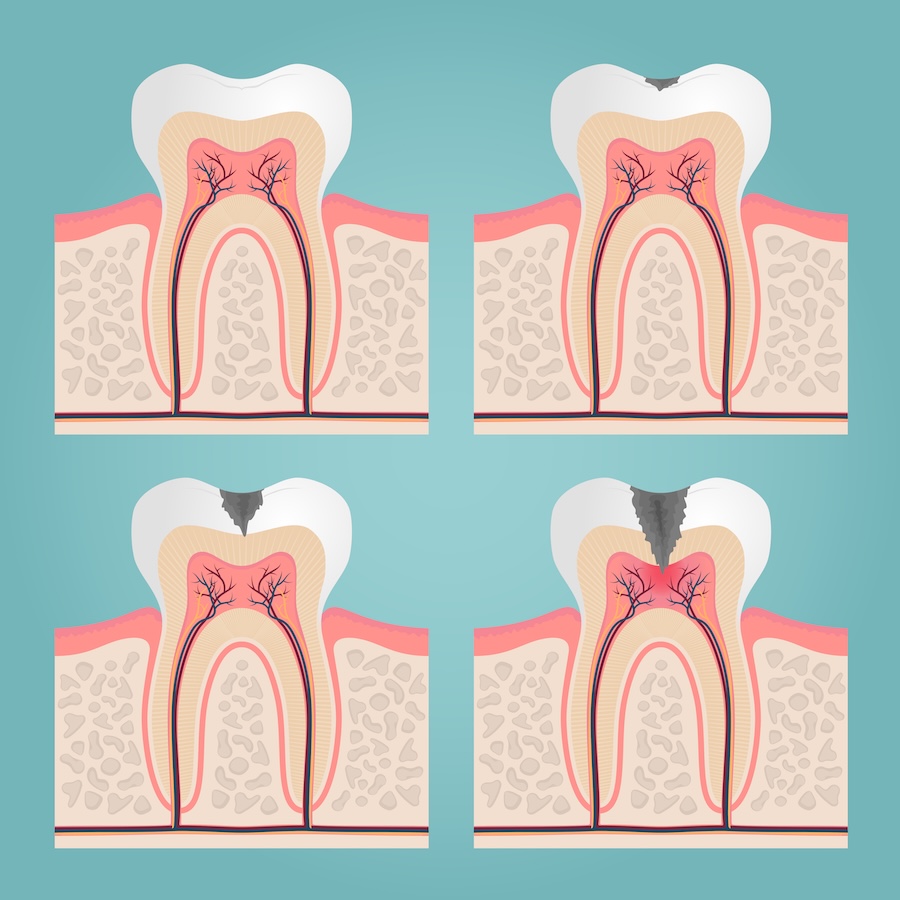
The depth of the decay also makes a difference. Decay starts on the outside of the tooth and can move through enamel into the dentin underneath. If bacteria reach the pulp, the nerve and blood supply inside the tooth can become inflamed or infected.
At that point, a filling alone may not solve the problem. Root canal treatment may be needed to remove the inflamed or infected tissue. Depending on how much of the tooth remains, a crown may also be recommended afterward.
Strong pain can sometimes happen when decay has moved deeper, but not every deeper cavity hurts badly. Some patients are surprised by how much decay is present because the tooth only felt mildly sensitive or did not hurt at all. That is why an exam and X-rays can be useful even when the symptoms seem small.
Once Dr. Cook or Dr. Kingston sees how much of the tooth is affected, they can explain the options in plain terms. A filling may be enough, or the tooth may need more support. The recommendation depends on what gives that tooth the best chance of staying functional.
How to Help Protect Your Teeth From Future Cavities
Cavities usually develop over time, so small daily habits can make a difference. Brushing twice a day with fluoride toothpaste helps remove plaque and gives the enamel some added protection. Taking a little extra time around the gumline, back teeth, and inside surfaces can help clean areas that are easy to miss.
The spaces between teeth need attention as well because toothbrush bristles do not reach them very well. Floss works for many people, while floss picks, interdental brushes, or water flossers may feel easier depending on your teeth and dental work. If one option is easier for you to use regularly, that is usually a better fit than something that sits untouched in a drawer.
How often you snack or sip on sweet drinks can also affect your teeth. Each time sugar or starch reaches the mouth, bacteria can produce acids that weaken enamel. So, sipping a sweet drink over several hours can expose the teeth more often than having it with a meal.
Water is a good choice between meals because it does not add sugar and can help rinse away some food debris. You do not have to avoid every sweet food or drink, but giving your teeth more breaks between them can help. Saliva needs time to neutralize acids and bring the mouth back toward a healthier balance.
Acidic drinks can also affect enamel, even when they are low in sugar. Soda, sports drinks, citrus drinks, and energy drinks can all contribute to enamel wear when they are sipped often. Having them with a meal and drinking water afterward can reduce how long the teeth stay exposed to acid.
Regular dental visits also help catch changes you may not notice at home. Dr. Cook and Dr. Kingston can check older fillings, look for early decay, and keep an eye on areas that have caused trouble before. That gives you a chance to deal with a smaller problem before it turns into a bigger one.
Common Questions About Dental Fillings
Can I Have a Cavity Without Any Pain?
Yes, cavities can develop without causing pain at first. A tooth may feel completely normal even when decay has started between teeth or in a deep groove. Routine dental exams and X-rays can help find those areas before they begin causing symptoms.
Does Every Cavity Need a Filling?
Not every early area of decay has reached the point where a filling is needed. If the enamel has only started losing minerals, fluoride and changes in home care may sometimes help strengthen it. Once a hole has formed, though, the missing tooth structure usually needs to be restored.
Does Sensitivity Always Mean I Need a Filling?
No, sensitivity can come from several different things. Gum recession, worn enamel, grinding, cracks, whitening products, and cavities can all cause a tooth to react. If the sensitivity is new or keeps happening in the same tooth, an exam can help figure out the cause.
Can a Cavity Form Around an Old Filling?
Yes, a tooth with a filling can still develop new decay. Plaque can collect around the edges of a restoration, especially if the filling has become chipped, rough, or worn. Regular exams help the dentist check those areas before the problem gets larger.
How Does a Dentist Know Whether I Need a Filling?
Your dentist looks at the tooth, asks about what you have been feeling, and checks the enamel and any existing dental work. X-rays are often used to look for cavities between teeth or in places that are difficult to see directly. Dr. Cook or Dr. Kingston can then show you what they found and explain whether a filling is the best option.
What Happens if I Wait to Treat a Cavity?
A cavity can continue getting larger as decay moves deeper into the tooth. As more tooth structure is lost, treatment may become more involved. If decay reaches the pulp, a root canal or another procedure may be needed instead of a filling.
How Do I Know Whether I Need a Filling or a Crown?
It depends largely on how much healthy tooth is left. Smaller cavities are often treated with fillings, while larger areas of damage may need more coverage from a crown. Dr. Cook or Dr. Kingston can look at the tooth and explain which option would give it enough support.
Have Your Tooth Checked at Jonesboro Dental Care in Jonesboro, AR
If you have noticed sensitivity, a recurring ache, pain while chewing, a dark spot, food trapping, or a change around an older filling, schedule an exam and find out what is causing it. Those symptoms can come from a cavity, but they can also be related to cracks, worn enamel, gum recession, or older dental work. Getting the tooth checked can give you a clear answer instead of wondering whether the problem is getting worse.
At Jonesboro Dental Care in Jonesboro, AR, Dr. Jonathan Cook and Dr. Mark Kingston can examine the tooth, explain what they see, and talk with you about the next step. A smaller cavity may only need a filling, while deeper decay or a weakened tooth may need another type of treatment. Call Jonesboro Dental Care to schedule an appointment with Dr. Jonathan Cook or Dr. Mark Kingston—we’d be glad to help you get answers and take care of the tooth!
Categorised in: Dental Fillings