
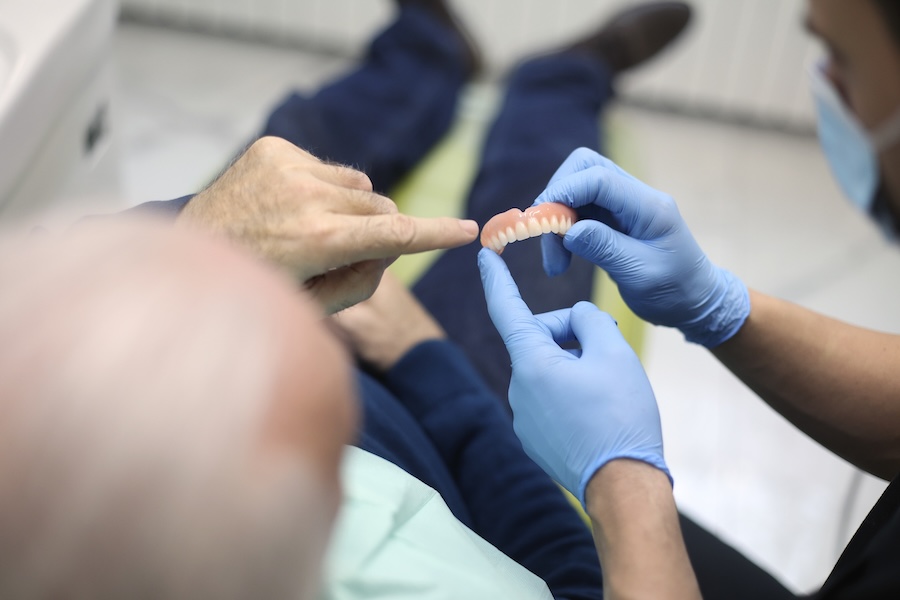
First 30 Days With Dentures: Sore Spots, Speech, Eating, and Follow-Ups
The first day with dentures can feel like a lot. Your smile may look fuller, but your mouth suddenly has to make room for something new while you talk, eat, swallow, and move through the rest of the day. Even a well-made denture can feel bulky before your cheeks, tongue, and gums get used to it.
Most people do not put in new dentures and immediately forget they are wearing them. There may be sore spots, extra saliva, a slight lisp, and a few meals that take longer than usual. Some foods will be easier than others, and chewing may feel more deliberate at first.
The first month is an adjustment period for both you and the dentures. At Jonesboro Dental Care in Jonesboro, AR, Dr. Jonathan Cook and Dr. Mark Kingston can smooth pressure points, check the bite, and make changes as your mouth settles. Follow-up visits are a normal part of getting the fit more comfortable.
What the First Day May Feel Like
New dentures often feel larger than expected. Your tongue may keep touching them, your cheeks may feel crowded, and swallowing can seem less automatic. The feeling usually becomes less noticeable as your mouth gets used to the new shape.
You may also produce more saliva for the first few days. The mouth sometimes reacts to a denture as though it were food or another unfamiliar object. That response usually settles once the denture no longer feels so new.
Follow the wearing instructions provided by Dr. Cook or Dr. Kingston. Some patients are told to remove their dentures at night from the beginning, while someone who received immediate dentures after extractions may be given a different schedule during the first day or two. Those instructions may change as the gums begin healing.
Immediate Dentures Have an Extra Adjustment Period
Immediate dentures are placed shortly after teeth are removed. They allow you to leave with teeth, but they sit over gums and bone that are still healing. The fit can change noticeably as swelling goes down.
During the first several weeks, the denture may begin to feel looser even though it fit closely on the day it was placed. The gums and jaw are changing shape as the extraction sites heal. This is expected, especially during the early stages.
Adjustments, temporary liners, or a later reline may be needed. In some cases, a new denture is made after healing is farther along. Keep the follow-up schedule recommended by the office because the fit can change quickly during this stage.
Sore Spots Are Common, but They Should Be Checked
A denture spreads pressure across the gums. If one section presses more heavily than the others, it can create a tender red spot or a small ulcer. The area may hurt during chewing or when the denture is placed back into the mouth.
Minor soreness is common early on, but you do not need to live with a spot that keeps rubbing. A small adjustment to the underside of the denture can relieve the pressure. Several small adjustments may be needed as different areas begin carrying more force.
Do not file, sand, bend, or trim the denture at home. It is easy to remove too much material or change the fit in a way that creates a new problem. Bring the denture to Jonesboro Dental Care so the pressure point can be located and adjusted accurately.
Wear the Dentures Before an Adjustment Visit
If a sore area is tolerable, you may be asked to wear the denture for a few hours before the appointment. The pressure leaves a visible mark on the gum, which helps the dentist identify the exact section that needs adjustment. This can make the visit more useful.
Taking the denture out for several days can allow the tissue to calm down, but it may also make the problem harder to locate. Ask the office how long to wear it before your visit rather than guessing. The right amount of wear depends on how sore the area feels.
If the pain is strong, the gum is bleeding heavily, or you cannot seat the denture fully, call the office. You may need to leave it out until you receive specific instructions. Severe discomfort should not be pushed through simply to keep wearing the appliance.
What Denture Soreness Should Not Feel Like
A mild tender area is different from severe or spreading pain. Call the office if the sore spot is getting larger, producing pus, or accompanied by facial swelling or fever. Those symptoms may involve infection or another problem that needs prompt care.
Burning, widespread redness, or white patches under the denture may point to inflammation or a yeast infection. Wearing the denture continuously and not cleaning it thoroughly can raise the chance of irritation. The tissue may need treatment before the denture feels comfortable again.
A mouth sore that does not heal should also be examined. Dentures can rub the tissue, but not every sore is caused by the appliance. A persistent area deserves a closer look rather than more time to “see what happens.”
Speech May Sound Different at First
Dentures change the space available to the tongue. Sounds such as “s,” “f,” and “th” may come out differently for a while, and you may notice a slight whistle or lisp. The change is often more noticeable to you than it is to other people.
Speaking slowly can help, and practicing at home may make certain words feel easier. Reading aloud for a few minutes can help the tongue find its new position. There is no need to force it, since speech usually improves as the mouth grows accustomed to the denture.
If clicking, slipping, or a strong speech change continues, the fit or bite may need to be checked. A denture that moves every time you speak may need more than practice. Dr. Cook or Dr. Kingston can look for areas where the appliance is lifting.
A Denture That Clicks While You Talk May Need Attention
An occasional click can happen while you are learning to control the denture. Frequent clicking, slipping, or lifting may mean the denture is moving more than it should. That can make speech feel less natural and may also affect eating.
Try slowing down and speaking at a comfortable volume. Fast speech and larger mouth movements can make a new denture less stable. As the cheeks and tongue adjust, the movement may become easier to control.
A lower denture often takes more practice because it has less surface area for support and shares space with the tongue. If it repeatedly pops loose, Dr. Cook or Dr. Kingston can check the fit and bite. A small adjustment may help the denture settle more securely.
Start Eating With Softer Foods
The first meals are easier with foods that require less chewing, such as eggs, yogurt, oatmeal, soft fish, cooked vegetables, pasta, applesauce, and mashed potatoes. These foods place less pressure on tender gums while you learn how the dentures move. They also make it easier to practice chewing without feeling rushed.
Cut food into small pieces before bringing it to your mouth. Smaller bites are easier to control and place less pressure on the gums. Chew slowly so you can notice whether the denture is rocking or lifting.
Hot foods and drinks can be harder to judge because the denture covers part of the tissue that normally senses temperature. Test them with a small bite or sip first. This is especially useful during the first few weeks, when everything already feels unfamiliar.
Chew on Both Sides at the Same Time
With natural teeth, many people chew mostly on one side without thinking about it. Dentures tend to stay more stable when pressure is shared across both sides. Putting all the force on one side can make the other side lift.
Place a small amount of food on the left and right, then chew with a slow, even motion. This may feel awkward at first, especially if you have used one side more than the other for years. With practice, the movement usually becomes less deliberate.
Small bites also help keep the pressure manageable. A large bite can push the denture out of position before you have time to correct it. Balanced chewing gives the appliance a better chance to stay seated.
Use the Side Teeth Rather Than the Front
Biting directly into a whole apple, sandwich, or piece of crusty bread can tip the denture. The front teeth place pressure near the edge of the appliance, which may cause the back to lift. This is one reason some foods feel harder than expected at first.
Cut firmer foods into manageable pieces and place them near the side teeth. The back portion of the denture usually handles chewing pressure more steadily. You may still need to chew slowly while learning how much pressure feels comfortable.
As your control improves, you may be able to eat a wider range of foods. Some items may always be easier when cut into smaller pieces. That is less about restriction and more about keeping the denture stable.
Some Foods May Need More Time
Sticky foods can pull on a denture and make it shift. Chewing gum, caramel, and gummy candy may remain difficult even after the first month. Seeds, nuts, and popcorn hulls can also work their way beneath the appliance and irritate the gums.
Very hard foods can place concentrated pressure on the denture or the tissue beneath it. Ice, hard candy, and unpopped popcorn kernels are better avoided. They can also damage denture teeth or create sore areas underneath the appliance.
Add foods back gradually and pay attention to which textures cause trouble. You may find that some foods become manageable with a different bite size or chewing technique. Others may simply not be worth the effort for a while.
Food Under the Denture Happens
Even with a good fit, small particles can sometimes slip beneath a denture. Seeds, crumbs, and leafy vegetables are common offenders. When they get trapped, they can make a small area feel surprisingly sore.
Remove the denture and rinse both your mouth and the appliance when this happens. Continuing to chew with food trapped underneath can create a pressure spot. A quick rinse is usually enough to get comfortable again.
Frequent food collection in the same area may mean the fit needs to be checked. The denture may be lifting during chewing, or the gums may have changed since it was made. Bring it up at the next follow-up instead of relying on adhesive to cover the problem.
Denture Adhesive Is Not Always Needed
A well-fitting denture may not require adhesive. Some people still prefer a small amount for extra confidence, especially while speaking or eating in public. Used correctly, it can make the appliance feel a little more secure.
Adhesive should be used in a thin layer rather than filling the entire inside of the denture. Too much can ooze around the edges and make cleanup harder. It can also make it difficult to tell whether the fit itself has changed.
A denture that suddenly needs much more adhesive to stay in place may have become loose. Adhesive can improve stability for a time, but it does not correct a poor fit. Dr. Cook or Dr. Kingston can check whether an adjustment or reline is needed.
Clean the Dentures and Your Mouth Every Day
Plaque, food, and bacteria collect on dentures just as they do on natural teeth. Remove them over a folded towel or a sink partly filled with water so they are less likely to break if dropped. Denture acrylic can crack if it hits a hard surface.
Rinse away loose debris, then brush the appliance with a denture brush or soft toothbrush. Use a cleaner recommended for dentures because regular toothpaste can scratch some materials. Pay attention to the grooves and the surface that rests against the gums.
The gums, tongue, cheeks, and roof of the mouth also need cleaning. If you wear a partial denture, brush and floss the natural teeth carefully, especially where the denture clips onto them. Those teeth often carry extra responsibility for supporting the appliance.
Take Dentures Out at Night Unless Told Otherwise
The gums usually need a break from denture pressure. Removing the appliance overnight gives the tissue time to recover and makes it easier to clean both the mouth and denture. Sleeping in dentures every night can also make irritation and inflammation more likely.
Store the dentures as directed so they do not dry out or lose their shape. Many types are kept in water or an appropriate soaking solution, although instructions may vary by material. Hot water should be avoided because it can warp the appliance.
Immediate dentures can come with different early wearing instructions after extractions. Follow the schedule from Jonesboro Dental Care rather than changing it on your own. The wearing plan may be adjusted as healing continues.
What Usually Changes During the First Month
By the second week, speech often feels less deliberate and softer foods become easier. New pressure areas may still appear as you begin chewing more confidently. This is common because different parts of the denture start carrying more force.
The fit can also change, especially after recent extractions. A denture that felt snug at first may begin lifting during speech or meals as the swelling goes down and the gums change shape. Immediate dentures often need more adjustments for this reason.
By the end of the month, many people are eating a broader range of foods and thinking less about every word they say. A lower full denture or immediate denture may still need more time and adjustment. Progress is usually gradual rather than perfectly smooth.
Follow-Up Visits Help Improve the Fit
New dentures commonly need adjustments. A scan or impression cannot fully predict how every part of the denture will feel once you begin chewing, talking, and wearing it for longer periods. The fit often needs to be fine-tuned based on what your mouth is actually experiencing.
At a follow-up, Dr. Cook or Dr. Kingston may use marking material to see where the denture is rubbing or hitting too heavily. A small amount of acrylic can then be smoothed without changing the rest of the fit. Even a tiny adjustment can relieve a very specific sore spot.
The bite may also need adjustment. If one side touches first, the denture can rock and create soreness somewhere else. Balancing those contacts can make the appliance feel much steadier during meals.
When to Call Before the Scheduled Follow-Up
Call when you cannot wear the denture, the pain is increasing, or the appliance is cutting the gum. A crack, loose denture tooth, or sudden change in fit should also be checked. Waiting can allow a small problem to become more uncomfortable.
Swelling, fever, pus, heavy bleeding, or difficulty swallowing needs prompt attention. After recent extractions, call if pain begins improving and then becomes much worse. A bad taste or odor may also point to a healing problem.
A denture that causes repeated choking, gagging, or trouble swallowing also needs evaluation. Mild awareness in the back of the mouth can happen early, but the appliance should not interfere with breathing or safe swallowing. The fit may need to be changed.
First-Month Denture Care at Jonesboro Dental Care
During the first month, start with softer foods, use small bites, and chew slowly on both sides. Practice speaking at home if certain words feel awkward, and keep the dentures and your mouth clean each day. Remove the appliance at night unless you were given different instructions after extractions.
At Jonesboro Dental Care in Jonesboro, AR, Dr. Jonathan Cook and Dr. Mark Kingston can adjust sore areas, check a denture that rocks or clicks, and monitor healing after tooth removal. These visits help the fit change along with your mouth. They also give you a chance to ask about eating, adhesive, cleaning, or anything else that still feels uncertain.
Call Jonesboro Dental Care when a sore spot keeps returning, eating remains difficult, or the denture no longer feels secure. A few careful adjustments can make the first month much easier. The sooner a pressure point is checked, the sooner the gums can settle.
Categorised in: Dentures